

How to Build a Professional Boudoir Photography Portfolio
A professional boudoir photography portfolio should do more than show that you can take an attractive photograph. It must help a prospective client understand your style, trust your professionalism and imagine themselves having the experience you offer.
This makes boudoir portfolio building different from assembling a general portrait gallery. The work is personal, clients may have understandable privacy concerns and the photographer must demonstrate more than lighting and camera technique. Posing, direction, emotional tone, consistency, discretion and the ability to photograph different people all matter.
This guide is written for photographers who want to build their first boudoir portfolio or improve an existing one. It covers planning purposeful shoots, working with models and real clients, styling, lighting, image selection, permission to publish and presenting a cohesive body of work that attracts the type of sessions you genuinely want to photograph.
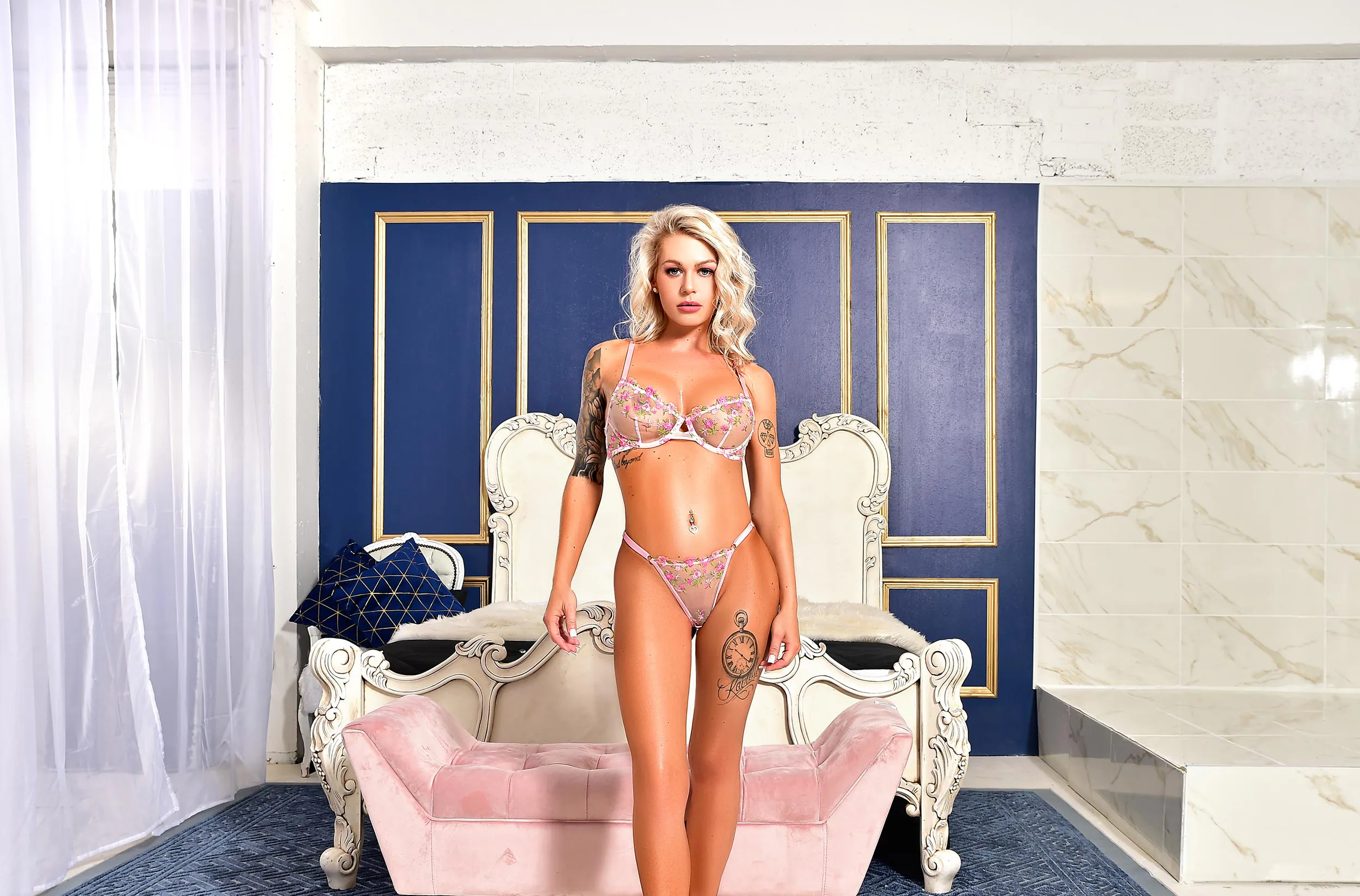
What should a professional boudoir portfolio achieve?
Your portfolio is a promise about the work a client can reasonably expect from you. It should answer several questions quickly:
- Is this photographer’s style right for me?
- Can they create consistent results beyond one successful image?
- Do they work with people I can relate to?
- Do the photographs feel confident, tasteful and professionally directed?
- Does the studio or location suit the experience I want?
- Will my privacy and personal boundaries be respected?
A collection of unrelated favourites may display creativity, but it does not necessarily communicate a clear service. The strongest portfolios balance consistency with enough variety to show skill across different clients, poses, outfits, sets and lighting conditions.
Start with the clients you want to attract
Before arranging a model call or choosing lingerie, decide what kind of boudoir work you want to book. A portfolio built without a clear audience often becomes a mixture of styles that attracts enquiries you do not actually want.
Consider whether your intended service focuses on:
- elegant boudoir for women;
- bridal boudoir;
- male boudoir;
- couples boudoir;
- curvy or body-inclusive portraiture;
- mature boudoir;
- vintage or pin-up styling;
- glamour-led imagery;
- artistic nude portraiture;
- dark-and-moody or light-and-airy aesthetics.
You do not need to restrict yourself permanently to one category. However, your initial portfolio should have a recognisable centre. If you want to attract elegant bridal clients, an entire gallery built around dark editorial lingerie may create the wrong expectation. If you want to photograph women, men and couples, each group should be represented deliberately rather than mentioned only in the written copy.
Ask yourself:
If someone booked me because of these photographs, would I be pleased to create this style again?
If the answer is no, the image may be impressive but it does not belong in your primary portfolio.

Audit what you already have
Before creating new work, review your existing images without sentimentality. Make a simple portfolio matrix so you can see genuine gaps.
| Portfolio element | Already strong | Needs development |
|---|---|---|
| Full-length poses | ||
| Seated and reclining poses | ||
| Close portraits and expressions | ||
| Body-detail photographs | ||
| Natural window light | ||
| Controlled studio light | ||
| Bright and romantic imagery | ||
| Dark-and-moody imagery | ||
| Different ages and body types | ||
| Women, men or couples served | ||
| Bridal or specialist styling | ||
| Full-session consistency |
Do not create a new shoot merely because you want more photographs. Create it to fill a specific gap. One carefully planned session can be more valuable than five shoots that repeat the same model, outfit, pose and lighting pattern.
Plan portfolio shoots with a defined purpose
Write a short creative brief for every portfolio-building shoot. It does not need to be elaborate, but everyone involved should understand what you intend to create.
Include:
- the intended client or service;
- visual mood and references;
- planned set or location;
- lighting approach;
- wardrobe and colour palette;
- hair and make-up direction;
- essential pose categories;
- approximate final image requirements;
- agreed usage and delivery terms;
- boundaries and level of coverage.
For example, “create twelve light, elegant bridal-boudoir images using white lingerie, veil details and soft window light” is far more useful than “take some bridal photographs”. A clear brief prevents the session from drifting towards whatever is easiest on the day.
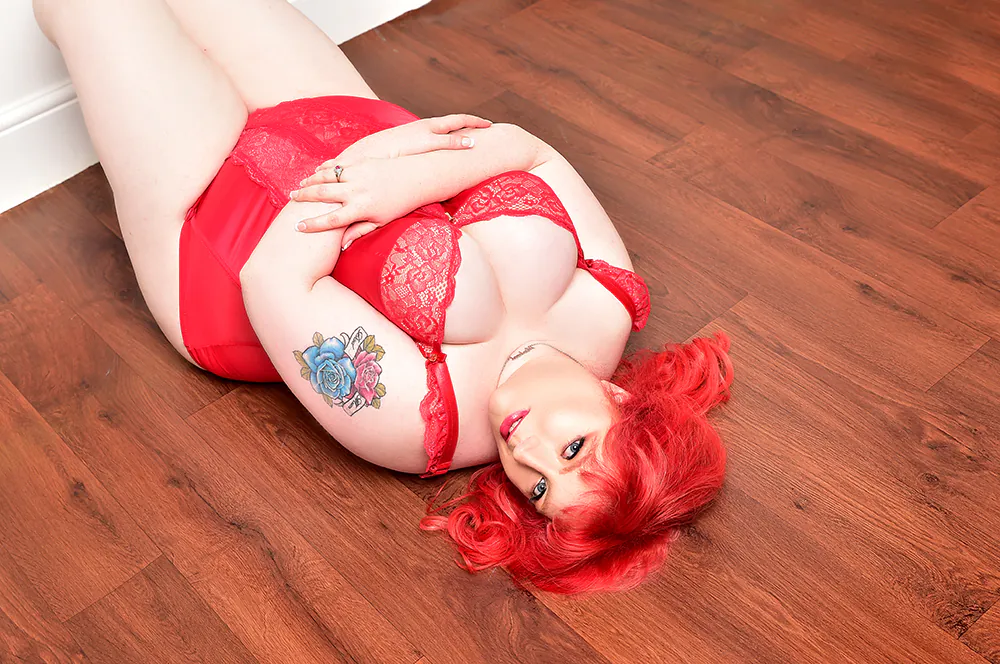
Choose the right people for portfolio building
There are several legitimate ways to create portfolio work. The right option depends on your experience, budget and creative objectives.
Hire an experienced model
Paying an experienced model is often the most efficient route when you need reliable posing, a defined level of work and clear portfolio usage. A professional model can help the session move quickly, but the photographer should still practise giving direction rather than relying entirely on the model’s own pose repertoire.
Agree the rate, duration, travel, level of coverage, deliverables and image usage before the shoot. Do not assume that paying a fee automatically grants unrestricted permission to publish every image.
Arrange a collaborative test shoot
A collaborative or time-for-images arrangement can benefit both photographer and model when each party receives useful portfolio work. Put the agreement in writing and specify:
- what each person contributes;
- how many edited images will be supplied;
- expected delivery time;
- where each party may use the images;
- whether either party approves final selections before publication;
- agreed wardrobe and level of coverage;
- cancellation terms.
“Collaboration” should not mean vague expectations or unlimited unpaid labour. Clear terms protect the relationship and make the session more professional.
Run a targeted model call
A model call should fill a defined portfolio gap rather than attract anyone interested in a free shoot. State the concept, eligibility, location, date, styling, required permissions and what the participant receives.
Be especially clear that a portfolio-building model call involves intended public use. Give applicants enough information to make an informed decision before they volunteer, and never pressure someone to accept more exposure or a more revealing level than originally agreed.
Reliability can be a challenge with free calls. A refundable booking deposit or clearly confirmed selection process may reduce casual applications, provided the terms are transparent and fair.
Invite existing clients to opt in
Real clients can make a portfolio more relatable, but their privacy must take priority over your marketing needs. Image creation, image delivery and permission to publish are separate matters.
Do not make public sharing feel like the price of receiving a normal paid service. Where a client is open to being featured, let them choose what may be used: identifiable portraits, selected images only, anonymous details, photographs without their face or no public use at all.
Permission should be active, informed and recorded. A client’s enthusiasm on shoot day should not be treated as permanent consent for every future platform or campaign.
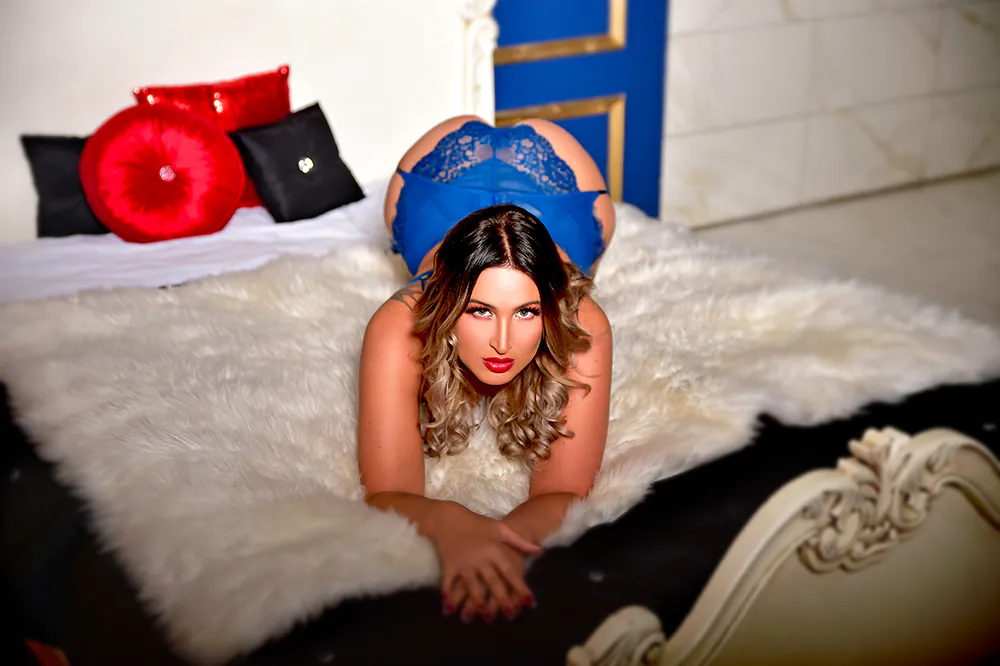
Build a team that supports the standard you want to sell
Hair, make-up and styling strongly influence how professional a boudoir portfolio feels. If these services will form part of your paid client experience, show them at the standard clients can expect.
Choose collaborators whose work suits the intended look rather than adding every available creative idea to one session. Share the brief beforehand and clarify image delivery and usage for the wider team.
Useful collaborators may include:
- a hair and make-up artist;
- lingerie or bridalwear designers;
- a stylist;
- a studio or location provider;
- a retoucher, where appropriate;
- an assistant for equipment and set safety.
Create variety without losing consistency
Variety shows range; consistency builds trust. The goal is not to make every photograph identical, but to create a collection that feels as though it came from the same photographer and service.
Aim to include:
- standing, seated, kneeling and reclining poses;
- direct eye contact and more reflective expressions;
- full-length, three-quarter, close portrait and detail crops;
- front, side and rear-facing body angles;
- a balance of softer and stronger moods;
- at least two lighting approaches;
- clean outfit and set changes;
- different people representative of the clients you serve.
Ten foundation poses can produce a substantial gallery when you vary camera height, crop, gaze, hands and movement. Our boudoir photography posing and client-direction guide explains how to build that variety without overwhelming the person in front of the camera.
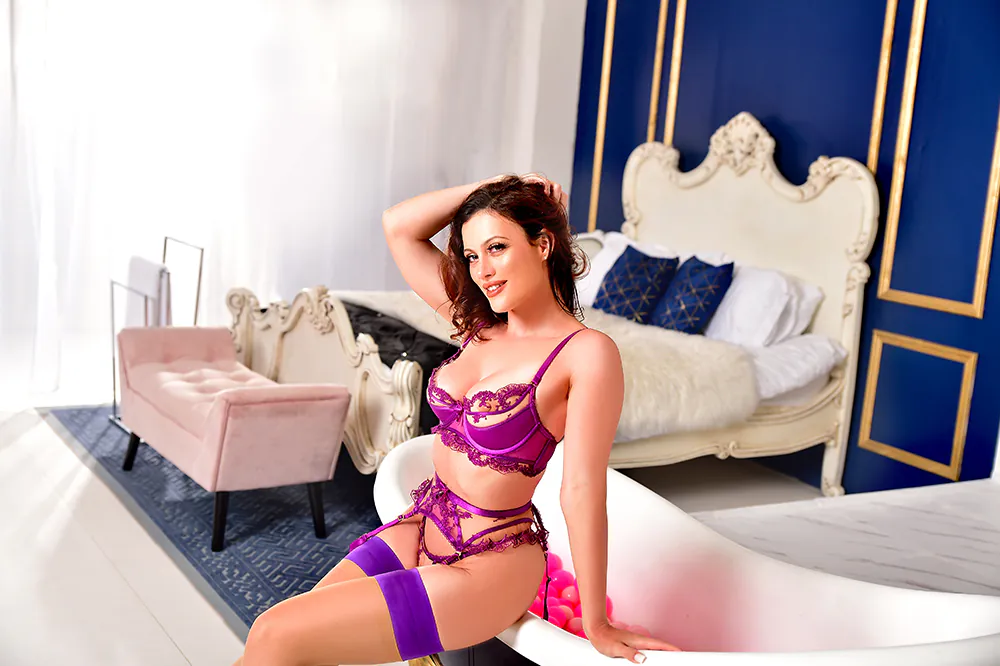
Show lighting skill – not lighting tricks
Your portfolio should prove that you can create intentional results in the spaces where you plan to work. Include enough variation to demonstrate control, but avoid making the gallery feel like a lighting experiment.
A useful portfolio might contain:
- soft window-light portraits;
- a consistent one-light studio series;
- gentle backlighting through voile or a window;
- a clear silhouette;
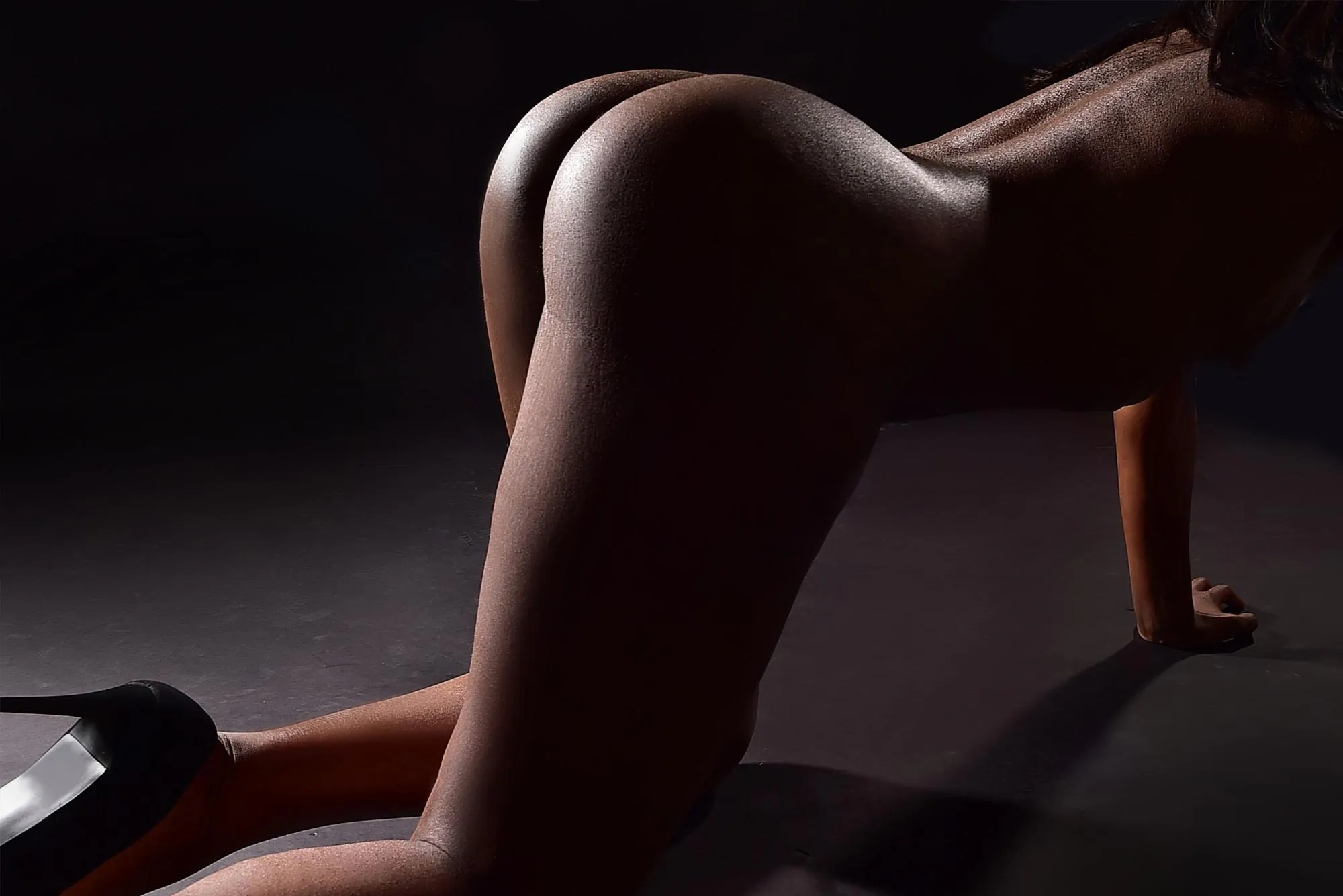
- selected dark-and-moody images.
Our guide to natural light versus studio lighting for boudoir photography provides practical set-ups for each of these approaches.
Lighting should also suit the service being promoted. If most paid sessions will take place in your studio after work hours, do not build the entire portfolio around midday sunlight that will rarely be available.
Demonstrate client direction and connection
Prospective clients may not recognise a lighting modifier, but they will notice stiff hands, uncertain expressions and uncomfortable body language. Your portfolio should demonstrate that the people you photograph feel directed rather than abandoned in front of the camera.
Look for:
- relaxed fingers, wrists and shoulders;
- clear separation between limbs;
- expressions consistent with the mood;
- poses adapted to the individual;
- natural movement between positions;
- eye contact that feels intentional;
- confident body language without forced exaggeration.
A technically flawless image can weaken your portfolio if the person appears uncomfortable. Connection and trust are part of the result you are selling.
Photograph a complete session, not only hero images
One exceptional photograph does not prove that you can deliver a complete client gallery. During portfolio sessions, practise creating a coherent sequence from arrival to final set.
For each scene, capture:
- an establishing full-length image;
- a three-quarter portrait;
- a close expression;
- a body or wardrobe detail;
- an alternative gaze or movement;
- a horizontal and vertical composition where useful.
Then change the pose, crop or camera position before rebuilding the entire lighting set-up. This creates variety efficiently and helps you test whether your workflow can deliver consistent quality across a real appointment.
Keep one or two private sample galleries that show a full session from beginning to end, but only where you have explicit permission to share them with prospective clients. These can offer stronger proof of consistency than a public page containing isolated favourites.
Select images with discipline
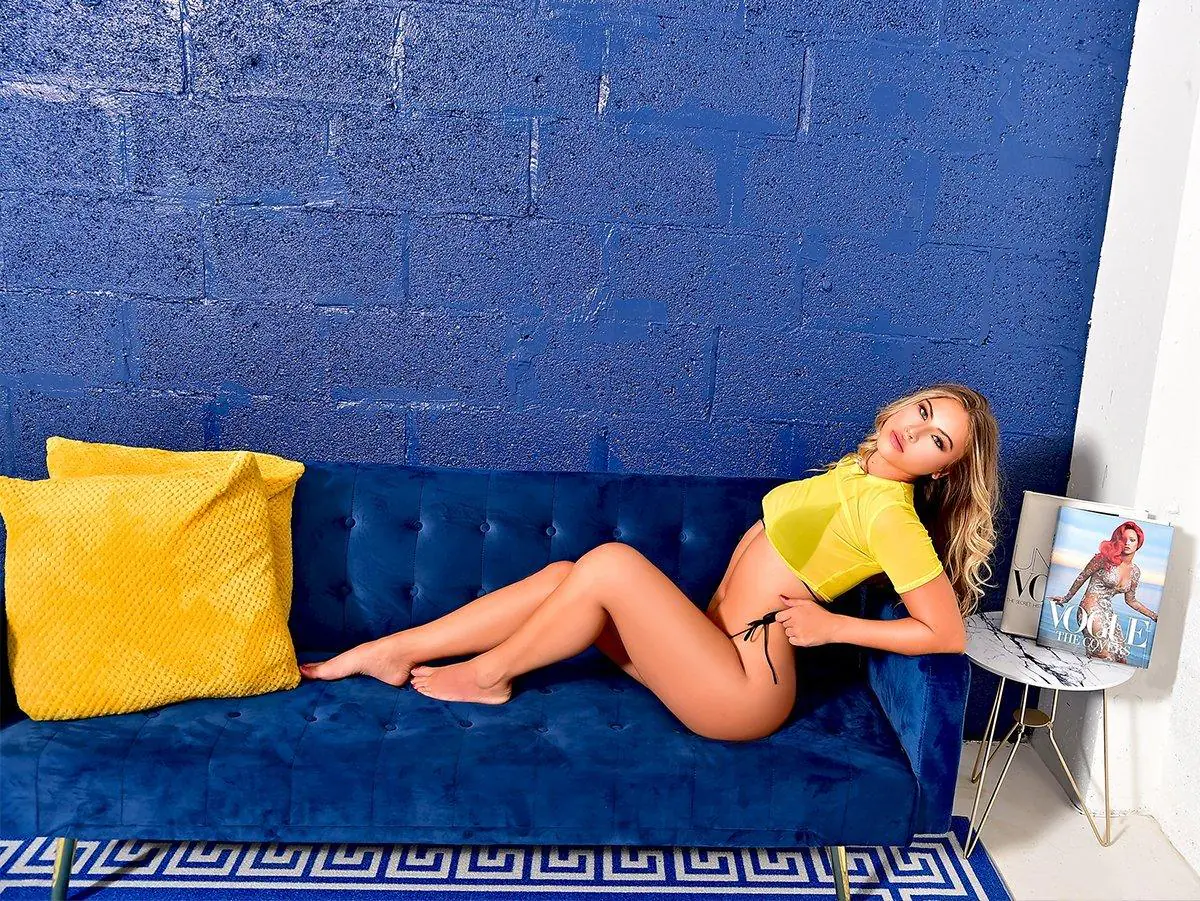
A smaller, stronger portfolio is usually more persuasive than a large gallery containing repetition or uneven work. Your weakest displayed image affects the standard clients associate with the whole collection.
Use a staged selection process:
First edit: technical quality
Remove missed focus, unintentional blur, awkward crops, distracting garment problems and frames with expressions you would not deliver.
Second edit: repetition
Keep the strongest variation rather than five nearly identical images. Similar frames make the portfolio feel larger without demonstrating additional skill.
Third edit: strategic relevance
Ask whether each photograph supports the clients, mood and service you want to attract. Remove images that point towards a different genre or standard, even when you personally like them.
Fourth edit: collection balance
Check representation, pose categories, lighting, expressions, crops and set variety. Do not let one highly productive shoot dominate the entire portfolio.
As an initial target, a focused website portfolio of approximately 20-35 excellent images is often more useful than 100 inconsistent photographs. This is a practical guideline, not a ranking requirement. Add separate specialist galleries only when each has enough strong work to justify its own page.
Keep editing and retouching consistent
Editing should support the photographic style rather than rescue inconsistent capture. Skin tone, contrast, colour, crop and black levels should feel coherent across the gallery.
Avoid displaying several conflicting editing trends merely to prove range. A client needs to understand what their finished photographs are likely to look like.
Professional boudoir retouching should preserve believable texture and identity. Remove temporary distractions where appropriate, but avoid reshaping bodies as a default or presenting extreme transformation as the expected service. Your portfolio establishes expectations about both aesthetics and body representation.
Review the final selection together on one screen. Images edited weeks apart may look consistent individually but noticeably different when placed side by side.
Treat consent, releases and privacy as portfolio fundamentals
Boudoir photographs are sensitive personal material. Never publish an identifiable image simply because you created it or hold the copyright. The ability to take a photograph, ownership of copyright and permission to use someone’s likeness for marketing are distinct issues.
Use written agreements suitable for your jurisdiction and business. Obtain professional legal advice where necessary.
Your written terms should clearly address:
- the parties and shoot date;
- the agreed level of coverage;
- where images may be used;
- whether usage includes website, social media, print, exhibitions, advertising or third-party publication;
- whether names or social handles may be used;
- whether the subject can approve selected images;
- the duration and any limits of permission;
- storage and delivery arrangements;
- the process for raising a concern or requesting a change.
Use specific options rather than one intimidating all-or-nothing release. A participant may be comfortable with anonymous images on your website but not identifiable images in paid social advertising. Record that distinction and respect it.
Never rely solely on a social-media message, a verbal conversation or the fact that a model posted an image themselves. Confirm your own permitted use in writing.
Build representation authentically
If your business welcomes women, men, couples, different ages, body shapes, skin tones, gender identities or clients with disabilities, your portfolio should offer authentic evidence where possible.
Do not treat representation as a checklist or make promises your current experience cannot support. Build it gradually through respectful casting, accessible planning and appropriate direction.
Avoid using only professional models if your service is intended for first-time clients. Experienced models can demonstrate polish, but relatable subjects help prospective clients imagine themselves in the photographs. A balanced portfolio can contain both.
Present the portfolio clearly on your website
Your website portfolio should make the photography easy to view without compromising performance or confusing visitors.
Use:
- a clear gallery introduction explaining the style and intended client;
- sharp, appropriately sized WebP or AVIF images where your system supports them;
- descriptive filenames and useful alt text;
- consistent image ratios or thoughtfully designed masonry layouts;
- a sensible balance of horizontal and vertical work;
- links to the relevant service or enquiry page;
- a mobile layout that does not hide important images or load excessively slowly.
Add context that builds trust
Images are central, but concise context can make a portfolio more persuasive. Explain what the client wanted, how the lighting or set supported the mood and how you helped someone without modelling experience feel comfortable.
Where permission allows, include:
- a short session story;
- a verified testimonial;
- a behind-the-scenes photograph;
- a lighting diagram;
- a brief explanation of posing or styling;
- examples of final album or print presentation.
Do not disclose sensitive personal details merely to make a story more emotional. Obtain permission for both the images and any identifying written account.
Common boudoir portfolio mistakes
Showing only one body type or one experienced model
This can make the work look polished but leave ordinary prospective clients wondering whether you can photograph them.
Mixing boudoir, glamour and explicit erotica without explanation
These genres can overlap, but an unstructured mixture creates uncertainty about the experience and level of imagery being offered. Separate services and galleries clearly.
Publishing images without specific permission
This damages trust and may create legal or reputational risk. Privacy is not an administrative detail in boudoir photography – it is part of the product.
Including too many similar photographs
Repetition makes the gallery feel less selective. Show the strongest version and use the space to demonstrate another skill.
Copying trends without developing a recognisable style
References can help with learning, but your final portfolio should reflect your own use of light, colour, direction and client experience.
Building work that cannot be reproduced
If the entire portfolio depends on a location, team or lighting condition unavailable to paying clients, it creates expectations your service cannot reliably meet.
Waiting for the portfolio to feel “finished”
A portfolio is never permanently complete. Launch with a strong, focused selection, then improve it deliberately as your skills and audience develop.
Review and update your boudoir portfolio
Revisit the gallery every three to six months or after a significant new shoot. Remove work that no longer reflects your technical standard, editing style or target audience.
Use enquiries as evidence. If people repeatedly request a service that is barely represented, decide whether to create more of that work or make your positioning clearer. If the portfolio attracts the wrong enquiries, examine which images are sending that signal.
Do not replace an older image merely because it is old. Replace it when newer work communicates the same purpose more effectively.
Build portfolio-ready work in a professional studio
Creating a strong boudoir portfolio becomes easier when you can practise lighting, posing and client direction in an environment designed for the genre. Our hands-on boudoir photography workshop in Leicester gives photographers the opportunity to develop practical skills and create considered images inside a professional boudoir studio.
The aim is not simply to leave with photographs of a model. It is to understand why a pose, lighting position or camera angle works so you can reproduce and adapt the result in your own future sessions.
FREQUENTLY ASKED QUESTIONS
How many images should a boudoir photography portfolio contain?
There is no fixed requirement. A focused website portfolio of around 20-35 strong, varied images can be more persuasive than a much larger inconsistent gallery. Every displayed photograph should serve a clear purpose.
Can I build a boudoir portfolio without paying models?
Yes, through a clearly agreed collaborative test shoot or targeted model call. Define the concept, image delivery, boundaries and usage in writing. Paying an experienced model may nevertheless be more reliable and efficient for a highly specific brief.
Do I need permission to display boudoir photographs?
You should obtain clear written permission appropriate to the intended use and your jurisdiction. Copyright ownership and permission to use an identifiable person’s image for marketing are different matters. Seek legal advice for your contracts and releases.
Should my portfolio include only professional models?
No. Professional models can help produce polished work, but a client-focused portfolio should also feel relatable to the people you want to photograph. Use an appropriate mixture and show that you can direct subjects with different levels of experience.
Should I include full galleries or only my best photographs?
Use a tightly edited selection publicly, but consider keeping one or two permission-cleared full sample galleries for serious prospective clients. Full galleries demonstrate consistency across an entire session.
How can I make my boudoir portfolio look consistent?
Define your audience and visual style, plan shoots around specific gaps, use repeatable lighting and maintain coherent colour and retouching. Select images as a collection rather than judging each one in isolation.
How often should I update my boudoir portfolio?
Review it every three to six months or whenever you produce work that more accurately represents your current standard. Remove weaker or misleading images rather than continually expanding the gallery.
What types of images should a boudoir portfolio include?
Include a considered balance of full-length, seated, reclining, close portrait and detail photographs, together with different expressions, camera angles and lighting styles. Represent the clients and services you genuinely offer.